

Safír
Safír er gimsteinn af fyrsta geisla. Hann er sami steinninn og rúbín (korund) en með öðru litarefni. Rauði gimsteinninn er rúbíninn en allar aðrar gerðir af korund eru þekktar sem safír. Litarefnin í bláum safír eru járn og títan.
Sapphire has been the most venerated of the colored gems. In the East it is the stone most frequently consecrated to the various deities. Buddhists believe it produces a desire for prayer and regard it as the stone of stones to give spiritual light and to bring peace and happiness—as long as its wearer leads a moral life.
In the Christian Church, it was often the stone on the Bishops’ ring, having the dignity of pontifical rank.
The Persians believed that the earth rests on a gigantic sapphire with the celestial heavens reflecting its color.
In some astrological systems, sapphires are related to the sign of Libra and its ruling planet Venus. In the Hindu tradition, sapphire is related to Capricorn and its ruler Saturn. The Hindus believed the sapphire rendered Saturn’s generally unfavorable influence favorable to the wearer.
Sapphire has a calming effect upon the mind, gives awareness of cosmic realms, symbolizes clear thinking, can strengthen the will of the wearer, and was worn by kings as defense from harm. Sapphire can provide a protection throughout trials and temptations of life. It’s the focus of the star of your causal body, indispensable to those who serve with Archangel Michael. Sapphire attracts the rays of Sirius.
-
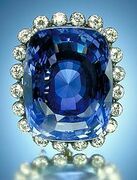
The Logan Sapphire (433 ct)
-
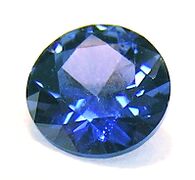
Sapphire from Yogo Gulch, Montana
-
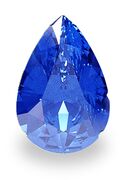
Teardrop shaped blue sapphire
-
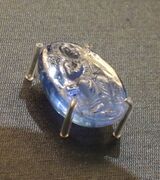
Sapphire icon from the Kremlin


_by_shakko_01.jpg)
See also
Sources
Elizabeth Clare Prophet, October 2, 1987, October 18, 1987, May 1, 1988.